

Table of Contents
- Why Durability Matters More Than Ever in Home Accessories
- How to Spot Quality in Home Accessories Before You Buy
- The Best Materials for Long-Lasting Home Decor
- Matching Material to Purpose: Where Each Choice Works Best
- Maintaining Home Accessories for Longevity: Simple Habits
- Common Bad Advice About Buying Home Accessories
- Your Checklist for Choosing Durable Home Accessories
- Frequently Asked Questions
Why Durability Matters More Than Ever in Home Accessories
Durable home accessories are items designed and constructed to withstand daily use without significant wear, maintaining both function and appearance over years rather than months. The real cost of a cheap decorative bowl or flimsy lampshade isn't the purchase price; it's the cycle of replacement, waste, and frustration that follows. When you factor in the time spent shopping again, the environmental toll of discarded goods, and the aesthetic downgrade of a fading piece, a well-made item often works out cheaper per use than a disposable one.
This guide cuts through the noise to show you exactly how to evaluate construction, materials, and purpose before you hand over your money. Below, we cover the material science that matters, the maintenance habits that extend lifespan, and the common advice you should ignore.
How to Spot Quality in Home Accessories Before You Buy
Learning how to choose durable home accessories starts long before checkout, with a simple physical inspection. Pick the item up. Does it feel heavier than you expected? Weight often signals solid construction, particularly in ceramics, glass, and metal pieces. A genuine brass candlestick has a satisfying heft; a plated one feels hollow and tinny.
Run your fingers along edges and seams. Roughness, sharp burrs, or uneven glazing point to rushed manufacturing. Check joints where handles meet bodies; on wooden items, look for dovetail or dowel joinery rather than staples. Examine how a piece sits on a flat surface. Wobbles mean poor tolerances, and poor tolerances mean the item will likely fail under stress.
A common mistake is trusting a brand name or a pretty product photo over the physical reality. Reviews mentioning "arrived broken" or "paint chipped within a week" are red flags that surface quality didn't match the marketing. For every accessory, ask one question: what will this look like after 500 uses? If you can't picture it holding up, it probably won't.
The Best Materials for Long-Lasting Home Decor
The single biggest predictor of longevity is material honesty. Best materials for long-lasting home decor are those that age gracefully, developing a patina rather than degrading into shabbiness. Synthetic composites and thin veneers often look great in the showroom but betray you within a season.
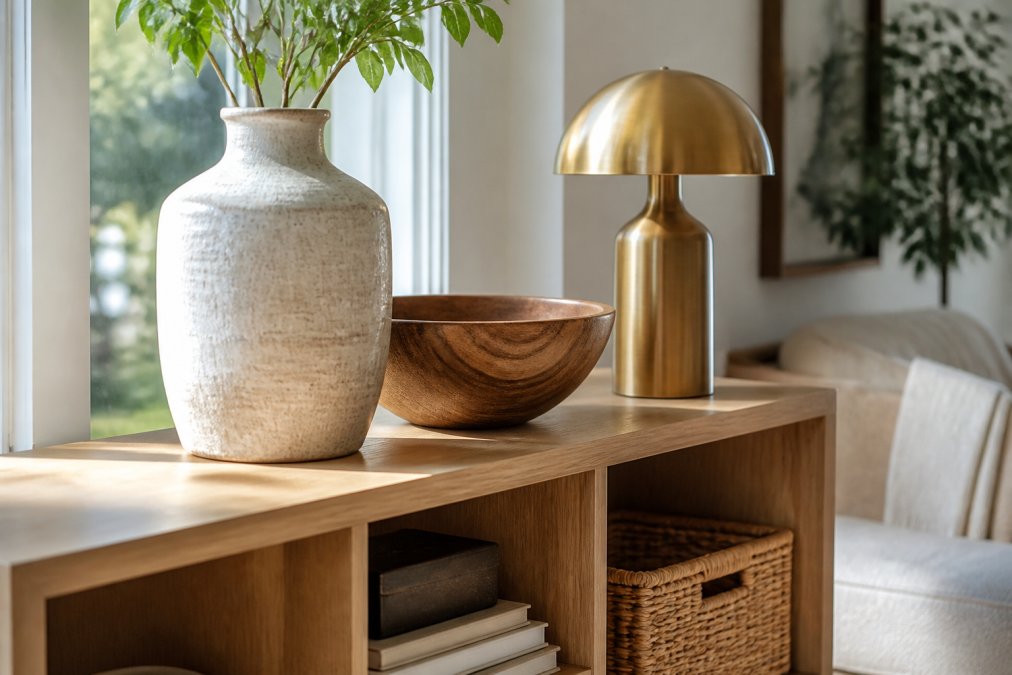
Natural Materials: Wood, Stone, and Ceramic
Solid hardwoods like oak, walnut, and teak are workhorses. They resist scratches, can be sanded and re-oiled, and their grain deepens with age. Stone, whether marble, granite, or soapstone, offers unmatched heat resistance and permanence, though it requires sealing to prevent staining. High-fired ceramic and stoneware are dense and chip-resistant, unlike low-fired earthenware that absorbs moisture and cracks easily.
Metals and Glass: Strength with Style
Solid brass, copper, and stainless steel offer the best lifespan for hardware and decorative objects. Avoid "brass effect" or zinc alloy pieces with a sprayed finish; the coating flakes within a year. For glass, look for borosilicate or tempered varieties used in drinkware and storage; they withstand thermal shock that shatters ordinary soda-lime glass. Thicker gauge metal, at least 1.5 millimetres for decorative pieces, resists bending and warping.
Matching Material to Purpose: Where Each Choice Works Best
Choosing durable home accessories means matching the material to the job it will do, not just the look you want. A rustic wooden tray is lovely for a bedside table but a poor choice for a bathroom where humidity will warp it; a sealed ceramic or stone tray is the better bet there.
| Accessory Type | Best Material | Why It Works | Where to Avoid |
|---|---|---|---|
| Kitchen utensils | Solid beechwood or stainless steel | Heat resistant, no chemical leaching | Plastic (melts, stains) |
| Vases and planters | High-fired ceramic or stoneware | Waterproof, chip-resistant | Low-fired terracotta (cracks in frost) |
| Trays and trinket dishes | Sealed stone or lacquered wood | Wipes clean, resists moisture | Unsealed wood in humid rooms |
| Lamp bases and hardware | Solid brass or steel | Stable weight, won't corrode | Zinc alloy with plated finish |
| Throw blankets and cushions | High-twist cotton or wool | Pilling-resistant, breathable | Acrylic blends (bobble and stretch) |
For high-traffic areas like hallways and kitchens, prioritise stain and scratch resistance over delicate aesthetics. For low-touch display pieces, you can afford more fragile materials like thin glass or intricate ceramic. One insider tip: check the care label or product description for "sealed" or "finished" language. An unsealed natural material in a wet zone is a ticking clock.
Maintaining Home Accessories for Longevity: Simple Habits
Maintaining home accessories for longevity is less about constant upkeep and more about a few consistent, correct habits. Dust regularly with a microfibre cloth to prevent abrasive grit from scratching surfaces. For wood, apply a food-safe oil every few months to keep the grain hydrated and prevent cracking in centrally heated homes.
Wash ceramics and stone by hand rather than in a dishwasher, where high heat and detergents can dull glazes and etch seals. For metals, use a dedicated polish appropriate to the alloy; a generic cleaner on brass can strip its protective lacquer. Glass benefits from a simple vinegar-and-water solution that avoids the streaky residue of commercial sprays.
Common Bad Advice About Buying Home Accessories
Much of the conventional wisdom around buying decor actively works against durability. The most damaging myth is that "you get what you pay for" in a linear sense; in reality, mid-priced, well-constructed items from specialist sellers often outlast premium-priced pieces from luxury brands where you are paying for a label, not better materials.
Another piece of bad advice is to buy everything in a matching set. While aesthetically tidy, sets force you into a single material, which may be wrong for different functions. A "coordinated look" of all-metal accessories will fail in a bathroom where you need waterproof ceramic. Buy for the specific function first, then find visual harmony.
Finally, ignore the advice to "just replace it when it breaks." This attitude treats home accessories as disposable, which is precisely why so many poorly made items flood the market. The most sustainable and economical approach is to buy fewer, better things from the outset, a philosophy that guides the curated selection at Speid's Shop, where each piece is chosen for its ability to genuinely enhance daily living without ending up in a drawer.
Your Checklist for Choosing Durable Home Accessories
Use this checklist whenever you shop, whether online or in person, to ensure you are choosing durable home accessories that will serve you for years.
- Heft test: Does the item feel solidly weighted for its size?
- Surface check: Run fingers over all edges; no rough seams, burrs, or uneven finish.
- Material honesty: Is it solid wood, stone, high-fired ceramic, or solid metal? Avoid plated or veneered claims.
- Purpose fit: Is this material appropriate for the room's moisture and traffic levels?
- Joinery inspection: On wooden items, are joints dovetailed or dowelled rather than stapled?
- Flatness test: Does it sit evenly without wobbling on a hard surface?
- Review scan: Do recent reviews mention chipping, breaking, or fading after light use?
- Care commitment: Are you prepared to oil, seal, or hand-wash it as required?
Research from consumer advice on product longevity consistently shows that buyers regret impulse purchases of cheap decor within months, while guidance on material care from the National Trust confirms that natural materials outperform synthetics when properly maintained. For a practical framework on evaluating craftsmanship, the Design Museum's guide to everyday objects offers useful criteria on what separates a quality piece from a disposable one.
Choosing durable home accessories ultimately comes down to slowing down and trusting your hands more than your eyes. A heavier, honest material that fits its purpose will always outperform a lighter, trendier alternative that fights its environment. At Speid's Shop, we curate each piece with this longevity in mind, offering free returns so you can verify the quality in your own space and a 30-day return policy if it doesn't fit your life. Explore the collection and find the pieces that will still be working for you years from now.
Frequently Asked Questions
What materials are most durable for home decor?
Solid hardwood, natural stone, ceramic, and metals like brass or stainless steel offer the best durability for home accessories. These materials resist wear, handle daily use, and age gracefully. Look for kiln-dried wood that won't warp, dense stone that resists chipping, and metals with a protective finish. Avoid thin veneers and lightweight composites that can peel, crack, or break within months.
How can I tell if a home accessory is high quality?
Check the weight, seams, and finish. A heavier item usually signals denser, more substantial materials. Run your hand over the surface to feel for rough edges or uneven finishes. Look at joints and connections on items like lamps or trays, and check that handles are securely attached. Ask about the return policy and read reviews that mention how long products have lasted.
Are expensive home accessories always more durable?
Not always. Price often reflects design, branding, or marketing costs rather than material quality. A mid-priced item made from solid oak or stone can outlast a costly piece made from cheap composite materials. Focus on the material and construction details rather than the price tag. Look for honest product descriptions that specify the materials used and how the item is made.
How do I maintain home accessories to ensure they last longer?
Dust regularly with a soft, dry cloth to prevent scratches. Keep wood away from direct sunlight and wipe up spills immediately to avoid stains. Apply a suitable wax or oil to unfinished wood a couple of times a year. Check metal items for tarnish and clean them with the right polish. Simple habits like these protect your accessories and keep them looking their best.
What are the best sustainable materials for long-lasting home decor?
Reclaimed wood, recycled glass, and responsibly sourced stone are excellent sustainable choices that also last for decades. These materials avoid the need for frequent replacement, which reduces waste. Look for items made from solid, natural materials without harmful plastic coatings. Choosing pieces that stay beautiful for years is one of the most sustainable decisions you can make for your home.
How do I balance style and durability when buying home accessories?
Start by choosing a classic silhouette that fits your space, then prioritise materials that will withstand daily use. A simple, well-made piece in a neutral tone will remain stylish for years. Consider how you will actually use the item. A decorative bowl that you will handle often needs tougher material than a purely ornamental sculpture. This way, you get a look you love without sacrificing longevity.


