

Table of Contents
- Why Steam Lifts Microwave Stains Without Scrubbing
- Step-by-Step: How to Clean Microwave Stains Without Scrubbing
- Microwave Steam Cleaning Duration: How Long Is Enough?
- How to Remove Burnt Food from Microwave Without Scrubbing
- Best Tools for Microwave Maintenance and Everyday Prevention
- Common Mistakes That Make Microwave Stains Worse
- Frequently Asked Questions
Last Updated: September 17, 2026
Why Steam Lifts Microwave Stains Without Scrubbing
Microwave stains are baked-on food residue and mineral deposits that bond to the interior surface when heat and time work together. Steam reverses that process. This guide from Speid's Shop explains how to clean microwave stains without scrubbing by using heat and moisture to loosen the bond first, so wiping does the rest.
Here is the science in one sentence: dried food and grease harden into a film that sticks to the microwave walls, and steam penetrates that film until it softens and releases. No abrasive pad required.
The NHS food safety and kitchen hygiene guidance is clear that kitchen surfaces need regular cleaning to prevent bacterial build-up, and the microwave interior is one of the most commonly missed spots.
What You'll Need Before You Start
- A microwave-safe bowl (glass or ceramic, no metal trim)
- Water, roughly 300ml
- Lemon juice or white vinegar
- A soft microfibre cloth or sponge
- A microwave splash cover for future prevention
That is it. No specialist products, no scrubbing pads, no chemicals.

Step-by-Step: How to Clean Microwave Stains Without Scrubbing
The core method is the same whether you use lemon or vinegar: heat water to create steam, let it sit, then wipe. The full process takes under fifteen minutes.
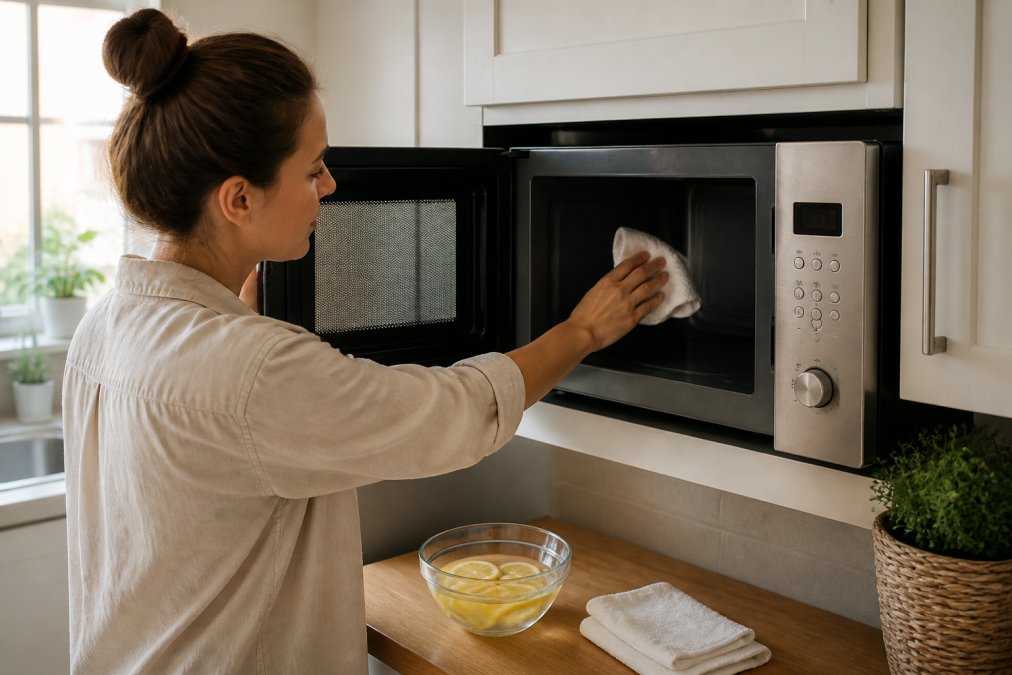
Method 1: Water and Lemon
- Fill a microwave-safe bowl with 300ml of water.
- Squeeze in the juice of half a lemon, then drop the rind in too.
- Heat on full power for three to five minutes until the window steams up.
- Leave the door closed for five minutes. The steam does the work here.
- Open the door, remove the bowl carefully, and wipe the interior with a soft cloth.
Method 2: White Vinegar and Water
- Mix equal parts white vinegar and water in a microwave-safe bowl.
- Heat for three to five minutes until steaming.
- Let it stand for five minutes with the door shut.
- Wipe down all surfaces, including the ceiling and door seal.
Vinegar works slightly better on mineral deposits and lingering odours. Lemon leaves a fresher scent. Both are equally effective on grease.
Microwave Steam Cleaning Duration: How Long Is Enough?
Microwave steam cleaning duration depends on how established the stain is. For light splatters, three minutes of heating plus five minutes of standing time is enough. For dried or burnt-on residue, extend the heating to five minutes and the standing time to ten.
A useful rule: if the interior window is fully fogged, you have generated enough steam. If it is only partly misted, add another two minutes.
Do not exceed ten minutes of continuous heating. You risk boiling the bowl dry, which can crack the glass and damage the microwave turntable.
How to Remove Burnt Food from Microwave Without Scrubbing
Learning how to remove burnt food from microwave interiors comes down to patience, not force. Burnt residue is carbonised, which means it has chemically bonded to the surface. Scrubbing it off with an abrasive pad will scratch the interior coating, and those scratches become traps for the next stain.
The fix is a longer steam session. Heat a bowl of water with two tablespoons of white vinegar for five minutes, then leave the door closed for a full ten minutes. The carbonised layer softens enough to lift with a cloth.
For stubborn patches, apply a paste of bicarbonate of soda and water directly to the spot, leave for ten minutes, then steam as normal. The mild alkali breaks down the burnt residue without abrasion.
Best Tools for Microwave Maintenance and Everyday Prevention
The best tools for microwave maintenance are a splash cover, a dedicated microfibre cloth, and a small spray bottle of diluted vinegar. Prevention costs less effort than cleaning, every time.
A splash cover is the single most effective preventive tool. The Microwave Splash Cover sits over your plate while heating, blocks splatters entirely, and has a hidden water storage box that keeps food moist rather than dried out. It is hand-wash only and designed for microwave mode only, with a maximum heating time of five minutes.
| Tool | Purpose | Frequency |
|---|---|---|
| Splash cover | Blocks splatters during heating | Every use |
| Microfibre cloth | Wipes surfaces after steaming | Weekly |
| Diluted vinegar spray | Spot-cleans and deodorises | Weekly |
| Bicarbonate of soda | Lifts burnt patches | As needed |
The [Adhesive Kitchen Paper Towel Holder(/products/adhesive-kitchen-paper-towel-holder) | speids-shop.com] keeps towels within reach beside the microwave, so a quick wipe becomes a habit rather than a chore. At £14.99 it is a practical addition to any small kitchen where counter space is tight.
Common Mistakes That Make Microwave Stains Worse
The most common mistake is scrubbing while the stain is dry. Dry scrubbing pushes residue deeper into the surface texture and spreads grease across a wider area.
Other errors worth avoiding:
- Using the grill or combination setting with a plastic cover in place, which can melt it
- Leaving spills to bake on through repeated heating cycles
- Wiping with a dry cloth, which just moves the residue around
- Skipping the door seal, where grease accumulates and causes odours
- Using bleach-based cleaners, which can damage interior coatings and leave fumes
The NHS guidance on cleaning in the home recommends regular cleaning with warm soapy water for kitchen surfaces, and the microwave interior deserves the same routine attention.
Frequently Asked Questions
What is the best way to clean a microwave without scrubbing?
Steam is the most effective method. Fill a microwave-safe bowl with 250ml of water and a sliced lemon, heat on full power for 3 to 5 minutes, then leave the door shut for a further 5 minutes so the steam loosens grease and dried-on food. Wipe the inside with a soft cloth. The softened residue lifts away with almost no pressure, so you avoid scratching the interior coating.
Does lemon juice really clean a microwave?
Lemon juice works because its citric acid breaks down grease and neutralises lingering food odours. It is not a disinfectant on its own, so pair it with the steam method rather than using it as a standalone spray. For everyday freshening, a bowl of water with a good squeeze of lemon is enough. For heavier build-up, white vinegar gives slightly more cleaning power.
How long should I run the microwave when steam cleaning?
Three to five minutes of heating is the standard microwave steam cleaning duration for most 800W to 1000W models. Higher-wattage microwaves need closer to 3 minutes, while lower-wattage ones may need 5. After heating, keep the door closed for 5 to 10 minutes so the steam has time to work on the stains before you wipe.
Is it safe to use steam to clean a microwave?
Yes, steam is safe for the interior cavity, the door seal and the turntable on most models. The main risk is scalding yourself when removing the bowl, so use oven gloves and let it cool for a minute first. Never pour water directly onto the microwave floor or into the vent openings, and check your manufacturer's manual before cleaning the door seal with anything stronger than warm soapy water.
Microwave stains are a maintenance problem, not a cleaning emergency, and the fix is prevention rather than effort. Speid's Shop stocks the tools that make that shift practical, including the Microwave Splash Cover at £19.99 and the Adhesive Kitchen Paper Towel Holder at £14.99, both backed by free shipping, free returns, and a 30-day return policy. Order now and keep your microwave spotless with a wipe instead of a scrub.


