

Table of Contents
- The Science Behind Why Earbuds Get So Dirty
- Earwax, Skin Cells and Everyday Grime: What Actually Builds Up
- How to Clean Earbud Speakers Safely
- The Best Tools for Cleaning Wireless Earbuds
- How Often to Clean Earbuds (And When to Do a Deep Clean)
- Prevention Tips: Keeping Earbuds Cleaner for Longer
- Conclusion: Small Habits, Big Difference
- Frequently Asked Questions
Last Updated: September 26, 2026
The Science Behind Why Earbuds Get So Dirty
If you want to know why earbuds get so dirty, the short answer is that your ear canal is a warm, moist, waxy environment, and earbuds sit directly inside it for hours at a time. Every time you wear them, they collect a fresh layer of the stuff your ear naturally produces.
This guide from Speid's Shop breaks down exactly what's happening, how to clean earbud speakers safely, and how to stop the build-up before it affects your sound.
The ear canal is self-cleaning. It produces cerumen, commonly called earwax, which traps dust and debris and slowly migrates outward. Earbuds interrupt that process. They block the canal, press wax against the speaker mesh, and hold warmth and moisture against the skin. The NHS guidance on earwax build-up notes that earwax is normal and protective, but anything that blocks its natural exit route will cause it to accumulate somewhere. With earbuds, that "somewhere" is the mesh grille.
Then there's the fit factor. A snug seal is what makes in-ear audio sound good, but that same seal concentrates everything your ear produces directly onto a small surface area.
Earwax, Skin Cells and Everyday Grime: What Actually Builds Up
Four things end up on your earbuds, and only one of them is earwax.
- Cerumen (earwax): oily, sticky, and the main culprit behind clogged mesh
- Skin cells: the ear canal sheds dead cells constantly, and earbuds catch them
- Sebum: the oil your skin produces, which binds everything else together
- External grime: dust, lint, and residue from your fingers, bag, or pocket
Together, these form a paste that hardens over time. A common mistake is assuming a quick wipe is enough. In practice, the wax that causes muffled sound has usually worked its way into the mesh itself, where a cloth can't reach it. That's when volume drops, sound becomes unbalanced, and one earbud starts sounding quieter than the other.
How to Clean Earbud Speakers Safely
Cleaning earbud speakers safely means removing debris without pushing it deeper or letting liquid near the driver. The mesh grille is delicate, and the driver behind it is not waterproof on most models.
Follow these rules every time:
- Never use water, alcohol sprays, or cleaning fluid directly on the speaker
- Never poke the mesh with pins, needles, or toothpicks
- Never blow hard into the speaker, as saliva is worse than dust
- Always remove the silicone tip first if your earbuds have one
The RNID advice on looking after your ears reinforces a simple point: keep anything you insert into your ear clean and dry. That principle applies to the earbuds as much as to your ears.
Step-by-Step: Cleaning the Mesh and Speaker Grille
- Remove the silicone tips and set them aside.
- Brush the mesh dry with a soft brush, working in one direction.
- Loosen stubborn wax with a gentle circular motion, never a digging one.
- Wipe the housing with a dry microfibre cloth.
- Clean the tips separately with warm soapy water, then dry them fully.
- Reassemble only when everything is bone dry.
The drying step matters more than people think. Reassembling damp tips traps moisture against the mesh and encourages the exact build-up you're trying to remove.
The Best Tools for Cleaning Wireless Earbuds
The best tools for cleaning wireless earbuds are a soft-bristled brush, a dry microfibre cloth, and a purpose-made cleaning tool with a fine tip for the mesh. You do not need a cabinet of specialist equipment.
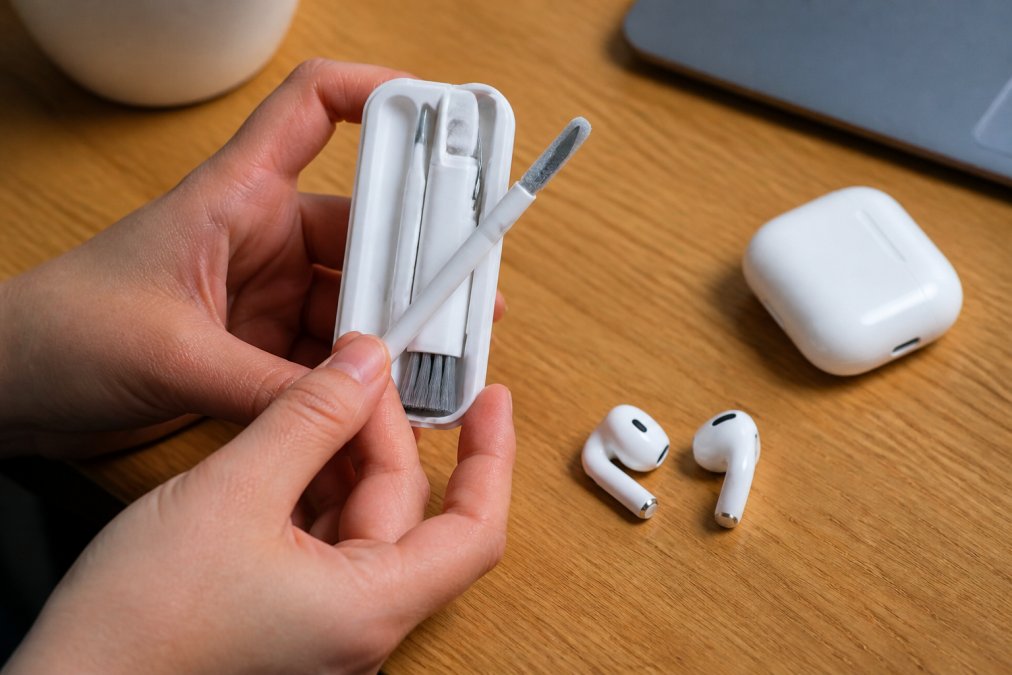
A dedicated kit removes the guesswork. The Airpod Cleaning Kit at £10.99 includes the brush and fine tools needed to lift dust and wax from the grille before your commute, without improvising with whatever's in a kitchen drawer. Improvised tools are how most earbuds get damaged.

| Tool | What It's For | Avoid |
|---|---|---|
| Soft brush | Lifting dry dust and wax | Stiff bristles that scratch |
| Microfibre cloth | Wiping housings and tips | Paper towels that shed lint |
| Fine-tipped cleaning tool | Reaching mesh edges | Pins, needles, toothpicks |
| Warm soapy water | Silicone tips only | Any liquid near the speaker |
How Often to Clean Earbuds (And When to Do a Deep Clean)
A quick brush after every few uses keeps things manageable. A full deep clean should happen roughly once a week if you wear earbuds daily, and more often if you exercise in them.
Signs you've waited too long:
- Volume sounds lower than it used to
- One earbud is noticeably quieter
- You can see visible wax on the mesh
- The fit feels less secure
If you're a heavy user, a gym-goer, or someone who wears earbuds for most of the working day, treat weekly as the baseline rather than the target.
Prevention Tips: Keeping Earbuds Cleaner for Longer
Prevention comes down to three habits: clean ears, clean hands, and a clean case.
Wipe your earbuds with a dry cloth after each session, before they go back in the case. Wash your hands before handling them, since finger oils transfer straight to the mesh. Keep the charging case itself clean, because a grimy case re-contaminates clean buds within a day.
Don't share earbuds if you can avoid it. Earwax and skin cells are personal, and shared buds transfer both. If you must share, clean them thoroughly between users.
Finally, resist the urge to over-clean with liquid. Dry methods handle almost everything. Save the damp cloth for the silicone tips, and let them dry completely before they go back on.
Conclusion: Small Habits, Big Difference
Earbuds get dirty because they sit in a warm, waxy environment that never stops producing the things that clog them. There's no way around that, but there is a way to stay ahead of it.
At Speid's Shop, we stock the practical accessories that make the routine easy, including the Airpod Cleaning Kit with free shipping and free returns, backed by a 30 day return policy and 100% secure payments. Platform-wide reviews sit at 5.0, and customer satisfaction is the priority behind every product we curate.
Shop now and give your earbuds the clean they've been asking for.
Frequently Asked Questions
Is it normal for earbuds to get dirty quickly?
Yes, it's completely normal. Every time you wear earbuds, they collect earwax, skin cells, sweat, and natural oils from your ears. If you wear them during workouts or store them loose in a bag, they pick up even more debris. The sealed design of in-ear models traps this build-up against the speaker mesh, so visible dirt can appear within just a few days of regular use. Cleaning them weekly keeps them hygienic and sounding their best.
How often should you clean your wireless earbuds?
A quick wipe-down after each use takes seconds and stops grime hardening on the mesh. Aim for a proper clean once a week if you use them daily. If you exercise, commute in dusty conditions, or share them with others, clean them every two to three days. Signs you need to clean sooner include muffled sound, reduced volume, or visible wax on the speaker grille.
What is the best way to remove earwax from earbud mesh?
Never poke the mesh with sharp metal objects, as this can tear it and damage the speaker. Instead, use a soft-bristled brush to loosen dry wax, then a slightly damp microfibre cloth to lift residue. For stubborn build-up, a dedicated cleaning kit with a soft brush and precision tip works best.
Can dirty earbuds cause ear infections?
Dirty earbuds can harbour bacteria, fungi, and debris that may increase the risk of ear irritation or infection, especially if you share them or wear them with damp ears. The warm, dark environment inside your ear canal is ideal for microbial growth. Cleaning your earbuds regularly, drying them after use, and avoiding sharing them with others reduces this risk. If you notice persistent itching, pain, or discharge, see a pharmacist or GP.


